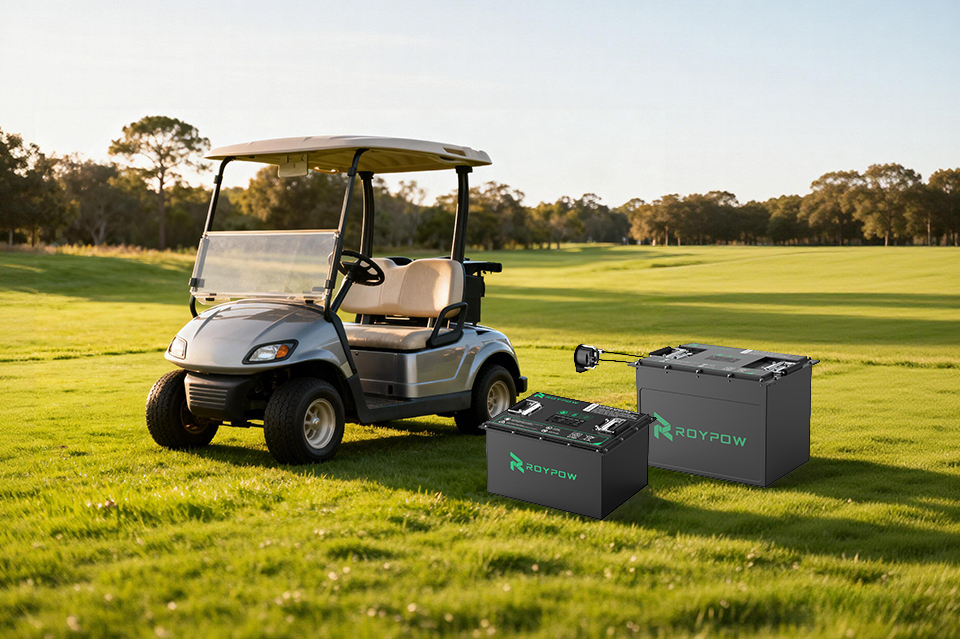
Quick Answer

For most EZGO RXV owners in 2026, upgrading from lead-acid batteries to a LiFePO4 lithium battery system is one of the most practical ways to improve range, reduce weight, simplify maintenance, and extend usable battery life. A properly selected lithium kit can deliver more consistent voltage under load, faster charging, lower long-term ownership cost, and better performance on golf courses, resorts, gated communities, farms, marinas, campuses, and commercial fleets around the global world.
The safest purchase path is simple: confirm your RXV model year, system voltage, battery tray dimensions, controller requirements, charger compatibility, BMS communication needs, and warranty terms before ordering. For many RXV carts, a 48V lithium conversion is the standard choice because the RXV platform commonly uses a 48V electric powertrain. However, buyers should not rely on voltage alone. Tray layout, cable routing, state-of-charge meter integration, mounting brackets, and the charger profile matter just as much.
If you want a concise recommendation, choose a LiFePO4 battery bundle designed for golf carts, with an integrated BMS, correct continuous and peak discharge ratings, a compatible charger, clear installation instructions, and regional technical support. A quality lithium solution can usually be installed by an experienced technician in two to three hours, while first-time installers should allow extra time for inspection, cleaning, cable verification, and testing.
When comparing global suppliers, look beyond advertised amp-hours. Consider real usable energy, discharge current, charging temperature protection, water and dust resistance, certification, after-sales support, and whether the manufacturer specializes in lithium technology. ROYPOW, for example, focuses exclusively on lithium battery systems and provides motive power solutions for golf carts, forklifts, aerial work platforms, cleaning machines, marine equipment, RV systems, and energy storage applications. For RXV owners, that lithium-only focus is relevant because golf cart conversions require dependable BMS design, pack engineering, chargers, monitoring, and support.
In short, an EZGO RXV lithium upgrade in 2026 is worth it when your cart is used regularly, when you want reduced maintenance, when range consistency matters, or when fleet uptime is important. It may not be the best choice only if your cart is rarely used, your lead-acid set is nearly new, or you cannot confirm compatibility. Always verify fitment before purchase.
Why Upgrade Your EZGO RXV to Lithium in 2026

The EZGO RXV remains a popular electric golf cart platform in the global world because it is widely used in golf communities, resorts, rental fleets, universities, industrial parks, tourist districts, ports, and private neighborhoods. From Florida golf courses and California resorts to Dubai leisure communities, Singapore campuses, Rotterdam logistics sites, Sydney holiday parks, Cape Town estates, and São Paulo hospitality venues, the RXV has earned a reputation for smooth driving and practical electric mobility. In 2026, the strongest reason to upgrade is not simply speed. It is operational efficiency.
Lead-acid batteries have served golf carts for decades, but they bring familiar limitations: water maintenance, corrosion, heavy weight, voltage sag, longer charge times, sulfation risk, and declining performance as the pack ages. Lithium iron phosphate, commonly called LiFePO4, addresses many of these limitations. A lithium battery system maintains a flatter discharge curve, which means the cart feels more consistent from the beginning of the ride to the end. This matters on hilly golf courses, resort transport routes, and commercial applications where drivers expect predictable acceleration and range.
Weight reduction is another major benefit. A traditional lead-acid pack can weigh several hundred pounds. Replacing it with lithium can remove a significant amount of mass from the vehicle. Less weight can improve acceleration, reduce tire and suspension strain, make steering feel lighter, and reduce turf impact. On golf courses in rainy climates such as the United Kingdom, Ireland, the Netherlands, Japan, and parts of Canada, lower vehicle weight can help reduce compaction and surface damage when carts operate on softer ground.
Charging convenience is also important. Lithium golf cart batteries typically charge faster and do not require watering. Many owners appreciate opportunity charging, which means topping up during breaks without the same memory or maintenance concerns associated with traditional battery care. Fleet managers at resorts, airports, theme parks, ports, and university campuses may use short charging windows between shifts to keep carts available. This can reduce the number of spare carts required for daily operations.
In 2026, sustainability trends are also influencing purchasing decisions. Many regions are tightening rules around battery recycling, hazardous materials handling, workplace safety, and low-emission transport. Lead-acid batteries are recyclable, but they still require careful handling and maintenance. Lithium solutions, particularly LiFePO4 chemistry, are attractive because they offer long cycle life and reduced routine service. For businesses with environmental, social, and governance goals, upgrading carts to efficient lithium power can support broader electrification and maintenance-reduction plans.
Technology is moving quickly. Modern lithium packs increasingly include Bluetooth or CAN-enabled monitoring, advanced BMS protection, improved thermal control, higher energy density, better charger communication, and more precise state-of-charge reporting. In premium systems, the BMS monitors cell voltage, pack temperature, current, charging conditions, short-circuit risks, and over-discharge protection. That level of intelligence is especially useful for RXV carts used by multiple drivers who may not understand battery care.
Another 2026 trend is the growth of standardized lithium conversion kits. Earlier conversions sometimes required custom fabrication or improvised wiring. Today, better suppliers offer drop-in-ready or near drop-in solutions with brackets, chargers, meters, cables, documentation, and support. This reduces installation risk and improves warranty clarity. Owners can explore professional-grade Golf Cart Batteries designed for modern cart applications rather than assembling unrelated components.
The economic argument depends on usage. A private owner who uses an RXV only a few weekends per year may focus mainly on convenience. A golf course or resort operating multiple RXV carts daily will focus on total cost of ownership. Lithium costs more upfront, but the combination of longer service life, less maintenance labor, shorter charging time, better uptime, and reduced replacement frequency can make the upgrade financially attractive. The more hours the cart works, the stronger the case becomes.
Finally, lithium upgrades help older RXV carts remain useful. Many 2008-2020 RXV vehicles are mechanically serviceable but limited by aging batteries. Instead of replacing the entire cart, owners can modernize the power system. This is common in mature golf markets such as the United States, Australia, South Africa, the United Kingdom, Spain, and coastal tourism regions where carts are valuable assets and replacement costs are high.
| Upgrade Factor | Lead-Acid RXV Experience | Lithium RXV Experience | 2026 Buyer Impact |
|---|---|---|---|
| Maintenance | Watering, terminal cleaning, equalization checks | Minimal routine maintenance | Lower labor and fewer service mistakes |
| Weight | Heavy pack affects acceleration and turf pressure | Much lighter pack improves efficiency | Better handling and reduced vehicle strain |
| Voltage stability | Voltage sag increases as charge drops | Flatter voltage curve under load | More consistent hill climbing and speed feel |
| Charging | Longer charging and stricter care routine | Faster charging with compatible charger | Improved fleet availability |
| Lifespan | Often shorter in hot, heavy-use environments | Long cycle life when properly managed | Lower replacement frequency |
| User experience | Performance declines noticeably with age | More predictable daily operation | Better for rentals, resorts, and shared carts |
This comparison shows why lithium is increasingly preferred in 2026. The decision is not only about range; it is about reliability, ease of ownership, and keeping the RXV platform productive in a more electrified mobility market.
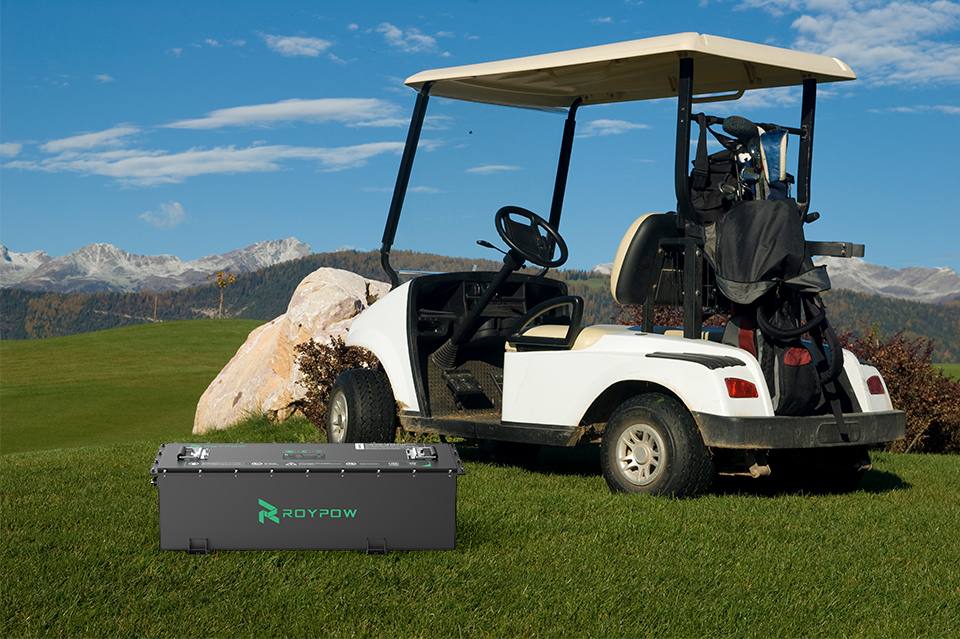
RXV Battery Tray Compatibility by Year, 2008 to 2026

Battery tray compatibility is one of the most important parts of an EZGO RXV lithium upgrade. The RXV has been produced across many model years, and while many carts share similar electrical architecture, individual configurations can vary by market, fleet specification, previous repairs, battery type, and accessory installation. A cart sold into a North American golf fleet may not be identical to a privately imported vehicle operating in the Caribbean, South Africa, the Middle East, or Southeast Asia.
Before buying a lithium kit, inspect the physical tray. Measure length, width, and usable height. Note any cross braces, hold-down points, corrosion, cable entry locations, and controller placement. Check whether the previous lead-acid layout used six 8V batteries, four 12V batteries, or another arrangement. Also verify whether the cart has factory accessories or aftermarket devices such as lights, audio systems, heaters, GPS units, lift kits, utility boxes, or DC converters.
For 2008-2012 RXV carts, tray condition is often the first concern. Older vehicles may have corrosion from years of flooded lead-acid use. Even if the frame is sound, the tray may need cleaning, repainting, or replacement before lithium installation. Lithium batteries are cleaner, but they should not be mounted into a damaged tray. A weak or rusted tray can compromise safety and may void product warranty.
For 2013-2018 RXV carts, compatibility is often easier, but the installer still needs to confirm mounting. Many lithium bundles are designed to replace the lead-acid set with one or more compact lithium modules. Depending on the kit, a spacer plate, bracket, or hold-down strap may be required. Secure mounting is essential because golf carts encounter vibration, curbs, ramps, trailers, and uneven paths.
For 2019-2026 RXV carts, electronics integration becomes a larger consideration. Newer vehicles may include more sophisticated displays, onboard charging systems, or accessory wiring. A lithium upgrade must preserve safe communication between the battery, charger, controller, and state-of-charge display. Some owners assume a battery that physically fits is automatically compatible. That is a common mistake. Electrical fit is just as important as mechanical fit.
| RXV Year Range | Typical Buyer Concern | Tray Check | Recommended Action |
|---|---|---|---|
| 2008-2010 | Age, corrosion, previous lead-acid leakage | Inspect tray welds, rust, and hold-down points | Repair or replace damaged tray before installation |
| 2011-2013 | Mixed fleet histories and varied battery layouts | Confirm dimensions and cable routing | Use a kit with clear bracket instructions |
| 2014-2016 | Accessory wiring added over time | Locate DC converter and accessory circuits | Separate traction and accessory wiring correctly |
| 2017-2019 | Controller and charger matching | Check voltage, current rating, and connectors | Choose matched lithium battery and charger |
| 2020-2023 | Display and state-of-charge integration | Verify meter compatibility | Install lithium-compatible SOC meter if needed |
| 2024-2026 | Warranty and electronics communication | Confirm OEM and supplier requirements | Use approved installation procedures and documentation |
The table highlights a practical point: every RXV lithium conversion should begin with inspection, not ordering. In busy trade hubs such as Los Angeles, Houston, Hamburg, Jebel Ali, Singapore, Durban, Melbourne, and Yokohama, carts may be imported, refurbished, re-exported, or modified for local use. The model year on paperwork may not tell the full story of the cart’s current configuration.
Voltage is the next compatibility issue. Many RXV electric carts use 48V systems, so buyers often compare 48V Golf Cart Batteries. However, if a cart has been modified or if the buyer is working with a special application, verification is mandatory. Never install a battery based only on assumptions from online forums. A technician should confirm the controller label, motor type, solenoid rating, charger output, and accessory voltage.
Buyers with other cart platforms or mixed fleets may also need 36V or 72V options. For example, some facilities operate older 36V carts alongside RXV units, and high-performance or utility fleets may use higher-voltage systems. In those cases, exploring 36V Golf Cart Batteries or 72V Golf Cart Batteries can help standardize supplier relationships, chargers, and service support across a broader fleet.
Battery tray compatibility should also include environmental conditions. Coastal carts near Miami, Barcelona, Cape Town, Bali, Sydney, and Rio de Janeiro face salt air. Desert carts in Arizona, Dubai, Riyadh, and inland Australia face heat and dust. Mountain courses in Switzerland, Colorado, Korea, and Japan face steep grades and temperature swings. A good lithium system should be chosen with local operating conditions in mind, including enclosure protection, BMS temperature limits, and charger storage location.
Best RXV Lithium Battery Bundles Compared
The best RXV lithium battery bundle is not always the one with the largest advertised capacity. A proper bundle should include the lithium battery pack or modules, compatible charger, mounting hardware, main cables, state-of-charge solution, installation guidance, warranty coverage, and access to technical support. Some low-cost listings include only the battery. That may look attractive at checkout, but it can create hidden costs if the charger is incompatible, the meter reads incorrectly, or the cables are undersized.
In 2026, most serious buyers compare lithium bundles by usable energy, continuous discharge current, peak discharge current, BMS protection, charging speed, cycle life, physical fit, certification, warranty, and supplier credibility. For RXV applications, peak current matters because the cart may demand high current during acceleration, hill climbing, or when carrying passengers and cargo. If the BMS is undersized, the cart may cut out under load even if the amp-hour rating appears sufficient.
Single-pack bundles can be clean and easy to install. They reduce wiring complexity and often leave extra space in the tray. Multi-module bundles may offer flexible placement and redundancy, but they require careful parallel wiring and balancing according to supplier instructions. Drop-in-style bundles are popular with dealers because they shorten installation time and reduce training requirements.
Fleet buyers should think in terms of standardization. A golf course in Scotland, a resort in Thailand, a retirement community in Florida, and a rental operator in the Canary Islands may all use RXV carts differently, but all benefit from repeatable installation and service. Standard battery bundles make it easier to train technicians, stock chargers, manage warranties, and track performance.
| Bundle Type | Best For | Strengths | Watch Points |
|---|---|---|---|
| Compact single lithium pack | Private RXV owners and light fleets | Simple wiring, clean tray, fast installation | Must confirm peak current and mounting |
| High-capacity single pack | Long routes, resorts, hilly courses | Extended range and fewer charge stops | Check size, weight distribution, and charger time |
| Dual or multi-module kit | Flexible tray layouts and retrofit projects | Adaptable placement and scalable capacity | Requires correct parallel wiring and fusing |
| Battery plus charger bundle | Most RXV conversions | Matched charging profile reduces risk | Confirm plug type and AC input region |
| Fleet service bundle | Golf courses, campuses, rental operators | Standard parts, documentation, support | Needs dealer coordination and inventory planning |
| Premium smart battery bundle | Data-driven operators and demanding users | Monitoring, BMS diagnostics, stronger protection | Higher upfront cost but better oversight |
This bundle comparison shows why buying advice must be application-specific. A private owner driving around a neighborhood does not need the same configuration as a resort shuttle running all day between villas, beaches, restaurants, and marinas. A golf course with steep terrain may value discharge current and thermal performance more than a flat community route.
A charger should be treated as part of the system, not an accessory. Lithium batteries require the correct charging profile. Using an old lead-acid charger can cause undercharging, overcharging, error codes, or BMS shutdown depending on the charger and pack. A matched Golf Cart Battery Charger helps protect performance and warranty coverage. Fleet operators should also consider charger mounting, AC plug standards, ventilation, cable strain relief, and whether chargers are used indoors or outdoors.
There are many places to buy golf cart batteries, including manufacturer networks, authorized dealers, online platforms, and regional distributors. Buyers may compare options through sources such as Golf Cart Batteries while still verifying compatibility, warranty, and technical documentation. The key is to avoid treating lithium batteries as generic boxes. The RXV is a vehicle system, and the battery must work with the full system.
Technological capabilities are a major differentiator between suppliers. ROYPOW maintains in-house research and development across BMS design, battery pack design, system integration, industrial design, inverter design, and software development. For RXV owners, this matters because a reliable conversion depends on more than cells. The BMS must protect the pack, the charger must communicate appropriately, the enclosure must tolerate real-world vibration, and the system must deliver current without nuisance shutdowns. A company with broad lithium engineering capability is better positioned to support complex motive power applications.
Product types also vary by voltage. Although the RXV is commonly associated with 48V systems, mixed fleets may need to evaluate 36V, 48V, and 72V lithium solutions. Buyers should choose based on the cart’s original design unless they are performing a professionally engineered powertrain conversion. For most RXV owners, staying with the correct factory voltage class is the safest and most cost-effective approach.
RXV Lead-Acid vs Lithium: Range, Weight and Lifespan
Range is one of the most searched topics in any EZGO RXV battery upgrade discussion, but range depends on many variables: battery capacity, cart load, tire size, terrain, speed, controller settings, passenger weight, wind, temperature, tire pressure, brake drag, and driving style. A lithium upgrade can improve range consistency because voltage remains steadier under load, but no battery can overcome poor mechanical condition or unrealistic usage.
Lead-acid batteries lose performance as they discharge. Drivers often notice the cart feels weaker near the end of the day. Lithium batteries maintain more consistent output until they reach a low state of charge, at which point the BMS protects the pack from over-discharge. This means lithium can feel stronger for longer, but users should still avoid repeatedly running the pack to shutdown. Healthy charging habits extend battery life.
Weight reduction affects range in two ways. First, the cart consumes less energy moving a lighter battery pack. Second, reduced load can improve acceleration and reduce stress on tires, suspension, and brakes. This is especially useful in hilly areas like San Francisco communities, Alpine resorts, Caribbean hillside properties, and South African estates. However, weight reduction can also affect handling if cargo distribution changes, so installers should secure the battery properly and test the vehicle after conversion.
Lifespan is where LiFePO4 technology often stands out. Lead-acid battery life can be shortened by deep discharge, lack of watering, heat, sulfation, and long storage without maintenance. Lithium packs with a quality BMS can deliver a long cycle life if used within specifications. Hot climates still require attention. Charging or storing batteries outside recommended temperature ranges can reduce life or trigger BMS protection. Owners in the Middle East, India, Southeast Asia, northern Australia, and desert regions should prioritize thermal specifications and shaded charging areas.
| Category | Lead-Acid RXV Battery Pack | LiFePO4 RXV Battery Pack | Practical Meaning |
|---|---|---|---|
| Usable performance | Declines noticeably as voltage drops | More stable output during discharge | Lithium feels more consistent on routes |
| Pack weight | Very heavy | Significantly lighter | Improves efficiency and reduces strain |
| Routine care | Watering and corrosion control | Minimal service | Better for shared and commercial carts |
| Charging time | Longer and less flexible | Usually faster with matched charger | Supports opportunity charging |
| Storage | Needs careful maintenance charging | Lower self-discharge | Easier seasonal storage when done correctly |
| Lifecycle cost | Lower upfront, more service and replacements | Higher upfront, longer life potential | Better total value for frequent users |
For private users, the value of lithium often appears as convenience. There is no watering schedule, less corrosion, and a more predictable ride. For commercial users, the value is uptime. A cart that charges faster, runs more consistently, and needs less maintenance can reduce downtime during peak operating hours. At a resort in Bali or Cancun, a cart out of service during guest arrivals is more than a battery issue; it affects customer experience.
Industries using RXV and similar carts include golf, hospitality, tourism, residential communities, security patrol, maintenance, ports, warehouses, campuses, airports, agriculture, and event management. At large venues such as exhibition centers in Frankfurt, convention districts in Las Vegas, sports venues in Melbourne, or port facilities in Singapore, electric carts are used as practical short-distance transport tools. Lithium upgrades support these applications by reducing daily service tasks.
Applications also differ by driving profile. Golf course carts may travel predictable distances with two passengers and clubs. Resort carts may carry luggage and climb ramps. Security carts may run long patrol loops at night with lights and radios. Maintenance carts may carry tools, sprayers, or cargo beds. Each application changes the battery requirement. A buying decision should therefore start with a duty cycle: distance per day, load, terrain, charging windows, and accessory power demand.
Case studies from the field often share similar lessons. A coastal resort operating RXV carts with lead-acid packs may experience corrosion, uneven battery aging, and slow overnight charging. After switching to lithium bundles with matched chargers, the maintenance team may reduce watering labor, improve morning readiness, and reduce complaints about weak carts. A gated community may find that lighter lithium-powered carts are easier for older residents to drive and charge. A golf club may appreciate reduced turf pressure and more consistent pace-of-play support.
Local suppliers and dealers remain important even in a global market. Shipping lithium batteries involves documentation, regional rules, and after-sales logistics. Buyers should ask whether the supplier has local inventory, trained technicians, warranty handling, and spare chargers. In global trade hubs such as Shenzhen, Ningbo, Jakarta, Los Angeles, Rotterdam, Hamburg, Dubai, Durban, Sydney, Tokyo, and Busan, battery distribution networks are becoming more mature, but service quality still varies.
How to Install an RXV Lithium Battery Kit in Two to Three Hours
A professional EZGO RXV lithium battery installation can often be completed in two to three hours, but that estimate assumes the cart is clean, mechanically sound, and the installer has the correct tools and kit. First-time installers should not rush. The safest process is to prepare the vehicle, remove the old batteries, inspect the tray, mount the lithium pack, connect the system, install the charger or charging port if required, verify the state-of-charge meter, and test the cart under controlled conditions.
Start by parking the RXV on a flat surface, turning the key off, engaging the parking brake, and following all lockout precautions. Wear eye protection and insulated gloves. Lead-acid batteries are heavy and can contain acid residue, so removal requires care. Photograph the existing wiring before disconnecting anything. Label cables if necessary. Disconnect the main negative cable first and follow the recommended sequence for your vehicle and battery supplier.
After removing the old batteries, clean the tray thoroughly. Neutralize acid residue if present, inspect for corrosion, and verify that the tray is structurally sound. Do not install a lithium pack into a compromised battery compartment. Check the main cables, solenoid connections, controller terminals, and accessory wiring. Replace damaged cables rather than reusing them. Lithium batteries can deliver strong current, and poor connections create heat, voltage drop, and reliability problems.
Mount the lithium battery according to the kit instructions. Use supplied brackets or approved mounting hardware. The battery must not slide, bounce, or contact sharp edges. Route cables away from moving parts, pinch points, and hot surfaces. Use correct torque values where provided. Over-tightening can damage terminals, while under-tightening can cause arcing or heat buildup.
Install the lithium-compatible charger. Some kits use an onboard charger, while others use an offboard charger connected through a charge port. Confirm AC input voltage for your region, especially in global markets where 110-120V and 220-240V power standards differ. A cart in the United States, Canada, Japan, the United Kingdom, Germany, Brazil, Australia, South Africa, or the Gulf region may require different plug types or charger input settings.
Next, install or calibrate the state-of-charge meter. Lead-acid meters often estimate charge based on voltage curves that do not match lithium chemistry. A lithium pack may appear full for a long time and then drop quickly if the meter is not compatible. A proper meter, Bluetooth app, or BMS communication display helps users avoid unexpected shutdowns.
Before driving, perform a static test. Verify pack voltage, charger connection, key switch operation, forward and reverse function, brake release, and accessory circuits. Then perform a low-speed test in a safe area. Listen for unusual noises, check for warning lights, and confirm that cables remain secure. After the first drive, recheck mounting and terminal tightness according to supplier guidance.
| Installation Step | Estimated Time | Main Task | Quality Check |
|---|---|---|---|
| Preparation | 10-20 minutes | Park, power down, gather tools, photograph wiring | Safety gear and documentation ready |
| Lead-acid removal | 25-45 minutes | Disconnect and lift old batteries safely | No loose cables or acid exposure |
| Tray inspection | 20-40 minutes | Clean, neutralize, inspect, repair if needed | Tray is solid and dry |
| Lithium mounting | 25-45 minutes | Position battery and secure brackets | No movement or contact with sharp edges |
| Electrical connection | 25-45 minutes | Connect main cables, charger, meter, accessories | Correct polarity and torque |
| Testing | 15-30 minutes | Static check and low-speed drive | No faults, heat, vibration, or shutdown |
This installation table is a planning guide, not a substitute for the manufacturer’s manual. If the RXV has custom wiring, lift kits, high-output controllers, upgraded motors, or commercial accessories, installation may take longer. When in doubt, use a trained dealer or technician.
Manufacturing capabilities influence installation quality because well-designed products reduce field problems. ROYPOW operates advanced production systems, automated lines, quality management processes, and a large testing center with high-precision instruments for battery cell testing, pack testing, BMS testing, charger testing, and energy storage testing. For customers, these capabilities translate into more consistent product build quality, better documentation, and stronger reliability expectations.
Owners should also prepare for responsible disposal of old lead-acid batteries. Most regions have recycling channels through battery shops, golf cart dealers, waste centers, or metal recyclers. Never discard lead-acid batteries in general waste. In 2026, battery recycling policies are becoming stricter in many markets, including the European Union, North America, Australia, Japan, Korea, and parts of Latin America. Proper recycling protects the environment and may be legally required.
RXV Controller and BMS Compatibility Requirements
The controller and BMS relationship is central to a successful RXV lithium upgrade. The controller manages vehicle power delivery, while the battery management system protects the lithium pack. If the controller demands more current than the BMS allows, the battery may shut down during acceleration or hill climbing. If regenerative braking sends current back into the battery under conditions the BMS cannot accept, faults may occur. Compatibility is therefore not optional.
The RXV platform is known for electronic braking and controller-managed operation. This makes it especially important to confirm how the lithium battery handles charging current, regenerative current, high-current discharge, low-temperature charging, over-temperature protection, short-circuit protection, and low-voltage cutoff. A generic lithium battery that works in a simple application may not be appropriate for an RXV if it cannot support the vehicle’s dynamic current demands.
Continuous discharge rating is the current the battery can deliver steadily. Peak discharge rating is the current it can deliver briefly. Golf carts often need peak current when starting from a stop, climbing a hill, or carrying passengers. Buyers should compare battery ratings with controller and motor requirements. Modified carts with larger tires, lift kits, speed upgrades, rear seats, cargo beds, or high-performance controllers may need higher current capability than stock carts.
Charging compatibility is equally important. The BMS must accept the charger’s voltage and current profile. If the charger is too aggressive, incompatible, or designed for lead-acid chemistry, it can trigger BMS protection or reduce battery life. If it is too weak or terminates incorrectly, the battery may not charge fully. Matched chargers reduce this risk.
Temperature protection is another 2026 requirement. LiFePO4 batteries generally should not be charged below specified low-temperature limits unless the pack includes heating or low-temperature charging protection. This matters in Canada, northern Europe, Korea, Japan, mountain resorts, and winter storage locations. In hot regions, over-temperature protection and ventilation around the battery compartment are important.
Communication features vary. Some lithium batteries operate independently with internal BMS protection. Others provide Bluetooth monitoring, CAN communication, display integration, or diagnostic software. Fleet operators increasingly prefer smart monitoring because it helps identify misuse, charging patterns, temperature events, and state-of-health trends. This supports preventive maintenance instead of reactive repair.
Accessory loads should not be ignored. Lights, USB chargers, stereos, coolers, GPS systems, fans, sprayers, and radios often run through a DC-DC converter. Do not tap accessories randomly from part of a lithium pack. Use a properly rated converter and follow the wiring diagram. Incorrect accessory wiring can cause imbalance, shutdowns, or warranty disputes.
For buyers comparing voltage classes across mixed fleets, 48 Volt Lithium Golf Cart Batteries are often central to RXV planning, while 36 Volt Lithium Golf Cart Batteries and 72V Lithium Golf Cart Battery options may support other vehicles. Standardizing around a reliable lithium supplier can simplify technical training and service procedures.
The most important compatibility advice is to share complete vehicle details with the supplier before buying. Provide model year, serial information, existing battery configuration, controller model, motor modifications, tire size, lift kit status, accessory list, terrain, and expected range. A reputable supplier or dealer should be able to guide you toward the correct battery and charger combination.
Five Common RXV Upgrade Mistakes That Can Void Warranty
Warranty protection depends on correct product selection, installation, use, charging, and documentation. Many warranty problems begin before the battery is ever installed because the buyer chooses an incompatible kit or ignores supplier instructions. Avoiding the following mistakes can protect both safety and investment.
The first mistake is using a lead-acid charger on a lithium battery. Even if the plug fits, the charging profile may be wrong. Lithium batteries need chargers designed for their chemistry and voltage. Using an incompatible charger can cause charging faults, BMS shutdown, undercharging, overcharging, or warranty denial. Always use the charger approved by the battery supplier.
The second mistake is poor mounting. A lithium battery must be secured in the tray. Foam blocks, loose straps, improvised brackets, or unsecured packs are not acceptable. Vibration and movement can damage terminals, cables, cases, and internal components. If the supplier provides mounting hardware, use it correctly.
The third mistake is incorrect wiring. Reverse polarity, undersized cables, loose terminals, missing fuses, accessory taps, and bypassed safety devices are serious risks. Lithium batteries can deliver high current, so wiring must be clean, tight, and properly protected. Installers should follow torque specifications and routing recommendations.
The fourth mistake is ignoring controller demand. A battery with insufficient discharge rating may cut out under load. This is common when owners install high-speed controllers, larger tires, lift kits, or rear seats without considering current draw. If the cart is modified, tell the battery supplier before purchase.
The fifth mistake is operating outside temperature limits. Charging below the battery’s allowed temperature or exposing the pack to excessive heat can trigger protection or reduce lifespan. Seasonal users should follow storage instructions, including recommended state of charge and periodic checks.
Other mistakes include pressure washing the battery compartment, bypassing the BMS, opening the battery case, mixing old and new lithium modules without approval, using non-approved chargers, failing to register the warranty, and not keeping purchase records. Commercial fleets should document installation dates, charger serial numbers, cart numbers, and service notes.
Buying from local suppliers or authorized dealers can reduce these risks. A local dealer in Dallas, Toronto, London, Dubai, Johannesburg, Sydney, Auckland, Singapore, Tokyo, or São Paulo may understand regional power standards, import rules, charger plugs, climate concerns, and service expectations. Online purchasing can work well, but only when technical support and warranty processes are clear.
Service capabilities are a key part of a reliable upgrade. ROYPOW supports customers through global subsidiaries, dealer networks, regional teams, technical support, warranty service, monitoring, and after-sales assistance. Its service approach emphasizes quick response and fast resolution. For an RXV owner or fleet manager, responsive service can be as important as the battery itself because downtime affects daily mobility, guest service, and business operations.
Our Company
ROYPOW TECHNOLOGY is a global lithium battery systems company focused on research, development, manufacturing, and sales of lithium-ion replacements for lead-acid batteries and energy storage solutions. With more than 20 years of experience in new energy solutions, ROYPOW serves customers around the global world through manufacturing bases, subsidiaries, dealer networks, and regional support teams.
The company specializes in lithium technology rather than producing lead-acid batteries. This focus supports a product portfolio covering motive power systems and energy storage systems. In motive power, ROYPOW provides LiFePO4 battery solutions for golf carts, forklifts, aerial work platforms, floor cleaning machines, scissor lifts, trolling motors, and other industrial uses. For golf carts, the lineup includes 36V, 48V, and 72V systems designed to help users replace lead-acid batteries with more efficient lithium power.
ROYPOW’s technological capabilities include in-house BMS design, battery pack engineering, system design, industrial design, inverter design, and software development. These capabilities are relevant to RXV upgrades because safe lithium performance depends on intelligent protection, proper current delivery, charger compatibility, and real-world reliability. The company’s engineering depth also supports complementary products such as chargers, DC-DC converters, alternators, and electrical solutions for vehicles and energy systems.
Its manufacturing capabilities include advanced production systems, automated lines, quality controls, and international certifications. A strong manufacturing base helps ensure repeatability, which matters when dealers and fleet operators install multiple battery kits across many carts. Consistency reduces installation surprises and improves service planning.
ROYPOW’s service capabilities include one-stop support from product design and manufacturing to monitoring, warranty, technical assistance, and after-sales service. The company has subsidiaries and support presence in markets including the United States, Brazil, the United Kingdom, Germany, the Netherlands, South Africa, Iraq, Australia, Japan, and Korea. For global RXV buyers, this regional presence can help with product availability, technical questions, and service coordination.
The company’s vision is to support energy innovation and a better life by helping build a more convenient and environmentally friendly lifestyle. In the RXV lithium upgrade market, that vision translates into practical benefits: cleaner battery compartments, reduced maintenance, longer runtime potential, and more efficient electric mobility for golf, hospitality, residential, industrial, and recreational users.
FAQ
Is an EZGO RXV lithium upgrade worth it in 2026?
Yes, for most regular users it is worth considering. Lithium can reduce weight, improve charging convenience, deliver more consistent performance, and reduce maintenance. The upgrade is especially valuable for golf courses, resorts, campuses, gated communities, and commercial fleets that use carts frequently.
What voltage battery does an EZGO RXV usually need?
Many EZGO RXV electric carts use a 48V system, but you should always verify your specific cart before ordering. Check the controller, existing battery configuration, charger, and vehicle documentation. Do not rely only on model year or online assumptions.
Can I use my old lead-acid charger with a lithium RXV battery?
In most cases, no. A lithium battery should be charged with a compatible lithium charger approved by the battery supplier. Using the wrong charger can cause faults, poor charging, battery damage, or warranty problems.
How long does an RXV lithium battery installation take?
A trained technician can often complete a standard installation in two to three hours. Older carts, corroded trays, custom accessories, or modified controllers can extend the installation time. Inspection and safe wiring are more important than speed.
Will lithium make my RXV faster?
Lithium may improve acceleration feel and consistency because it reduces weight and maintains voltage better under load. However, top speed is usually controlled by the cart’s motor, controller, programming, tires, and safety settings. A battery upgrade alone should not be treated as a speed modification.
How much range will I get after upgrading?
Range depends on battery capacity, terrain, load, tire pressure, driving style, temperature, and accessories. Lithium often provides more consistent usable performance than aging lead-acid batteries, but buyers should match capacity to their daily route and duty cycle.
Does battery tray size vary by RXV year?
Tray layout and condition can vary by year, market, and previous modifications. Carts from 2008-2012 may have more corrosion concerns, while newer models may require closer attention to electronics and display integration. Always measure the tray before purchase.
What is the biggest mistake when upgrading an RXV to lithium?
The biggest mistake is buying a battery based only on voltage and amp-hours. RXV owners must also verify discharge current, BMS capability, charger compatibility, physical mounting, controller requirements, and warranty rules.
Can I install lithium batteries myself?
Experienced owners with electrical knowledge may install a proper kit by following the supplier’s manual. However, professional installation is recommended if you are unsure about high-current wiring, controller compatibility, charger installation, or accessory circuits.
Are LiFePO4 batteries safe for golf carts?
Quality LiFePO4 batteries with a properly designed BMS are widely used in golf carts and motive power applications. Safety depends on correct product design, installation, charging, temperature management, and following the manufacturer’s instructions.
What should fleet managers ask before buying?
Fleet managers should ask about cycle life, warranty, charger matching, installation training, spare parts, regional service, battery monitoring, peak current, environmental ratings, and documentation. They should also test a pilot cart before converting a full fleet.
Where can global buyers source RXV lithium batteries?
Buyers can source through manufacturers, authorized dealers, regional distributors, and specialized battery retailers. The best supplier is one that can confirm compatibility, provide a matched charger, support warranty claims, and offer technical help in your region.